


Famotidine Injection
For Mild to Severe Acid-Related Gastrointestinal Conditions
Effective control of gastric acid secretion, supporting the healing of gastrointestinal ulcers and the management of acid-related disorders.
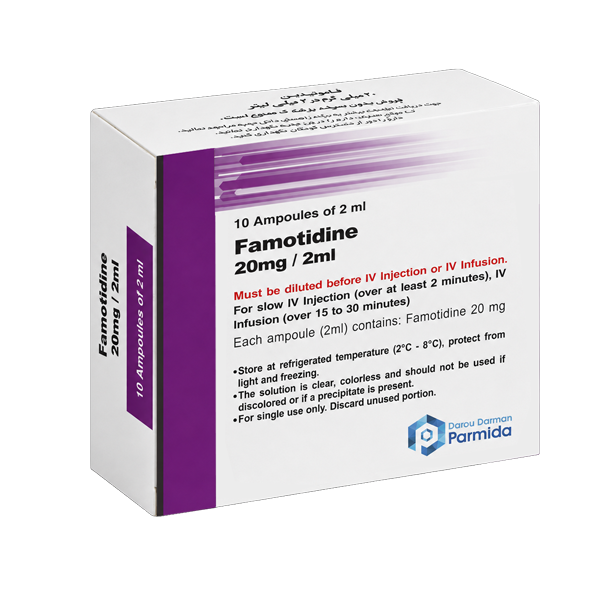
Effective Acid Control
Management of acid-related conditions
Standard, Reliable Dose
Precise dosing for dependable efficacy
Specific Clinical Settings
For patients who require an injectable form
Pharmaceutical Standards
Manufactured in line with quality requirements
Why Famotidine Injection from Darou Darman Parmida?
Targeted Control of Gastric Acid
Normally, the stomach secretes acid to aid digestion. Excess secretion, however, can lead to problems such as inflammation, peptic ulcers and reflux.
Selective Inhibition of Gastric Acid Secretion
Famotidine blocks histamine H₂ receptors on the parietal cells of the stomach, reducing hydrochloric acid secretion.
Clinical Efficacy in Acid-Related Disorders
Famotidine is used clinically in gastric and duodenal ulcers, gastro-oesophageal reflux disease (GERD) and conditions involving acid hypersecretion.
An Option When Oral Therapy Is Not Possible
The injectable form is used in patients who cannot take oral medication or who require intravenous treatment.
Reduced Acid, Better Conditions for Mucosal Repair
Lowering the gastric acid load reduces mucosal irritation and creates more favourable conditions for acid-related lesions to heal.
Active Ingredient
How Famotidine Works
Famotidine
H₂-receptor antagonist · 20 mg per 2 mL ampouleA histamine H₂-receptor antagonist that reduces the secretion of gastric acid.
Mechanism of Action
Famotidine binds to H₂ receptors on the parietal cells of the stomach and blocks the action of histamine. Reduced stimulation of these receptors lowers proton pump activity and, in turn, the secretion of hydrochloric acid (HCl).
Result: less damage to the gastrointestinal mucosa and better conditions for ulcer healing and the control of acid-related disease.
Contraindications
- History of severe hypersensitivity (such as anaphylaxis) to famotidine or other H₂-receptor antagonists.
- Known hypersensitivity to any component of the product.
Storage
Store in a refrigerator (2–8 °C). Protect from light and freezing.
The solution is clear and colourless; do not use if it is discoloured or contains a precipitate.
Safety
Warnings and Precautions
Renal Impairment
Famotidine is excreted mainly by the kidneys. In patients with moderate to severe renal impairment, the dose should be reduced or the dosing interval adjusted as directed by a physician.
Hypersensitivity
If signs of an allergic reaction occur, such as rash, swelling, shortness of breath or severe hypersensitivity reactions, treatment must be stopped and appropriate medical measures taken.
Gastrointestinal Alarm Symptoms
In patients with unexplained weight loss, gastrointestinal bleeding or severe gastrointestinal symptoms, underlying disease should be ruled out before treatment begins.
Elderly and Renal Patients
These groups are at greater risk of central nervous system effects, such as confusion or altered mental state, and need closer monitoring.
Note
Famotidine injection is a prescription medicine. It must be used only as prescribed by a physician and under the supervision of healthcare professionals.
Administration
As Directed by a Physician
Prescribed and Administered by Professionals
To be prescribed by a physician and administered by healthcare professionals. Dose and duration are determined according to the patient’s condition.
Dilute Before Use
Must be diluted before intravenous injection or intravenous infusion.
Slow IV Injection or IV Infusion
Slow intravenous injection over at least 2 minutes, or intravenous infusion over 15 to 30 minutes.
Single Use Only
Each ampoule is for single use. Discard any unused portion.
FAQ


Leave A Comment